
⸻ A Spiritual Practice Rooted in Puranic Wisdom
Ekadashi—the eleventh lunar day (tithi) of both the waxing (Shukla) and waning (Krishna) phases of the moon—is one of the most important observances in Hindu spiritual practice. Devotees around the world, especially followers of Lord Vishnu, observe Ekadashi through fasting, prayer, and meditation, linking their lives to a tradition that spans millennia.
Why Ekadashi Holds Deep Spiritual Importance
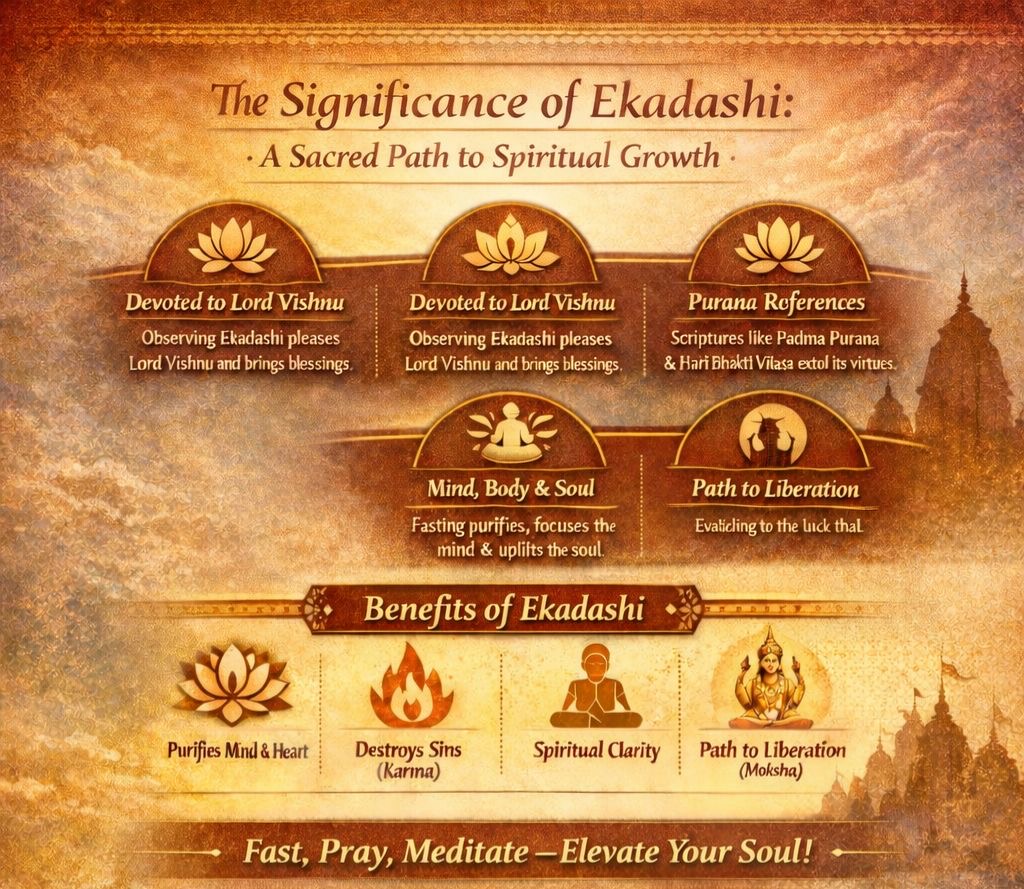
1. A Day Dedicated to Lord Vishnu
Ekadashi is intrinsically connected to Lord Vishnu, the preserver in the Hindu trinity. According to Puranic legend, during the battle with the demon Mura, a divine energy emerged from Vishnu and vanquished the foe. Pleased, Vishnu named her Ekadashi and declared that observing a fast on this day would grant devotees His blessings, spiritual merit (punya), and ultimately liberation (moksha).
2. Scriptures and Purana References
Texts such as the Padma Purana, Brahma‑Vaivarta Purana, Bhavishya Purana, and Hari Bhakti Vilasa emphasize the potency of Ekadashi fasting:
• These scriptures describe Ekadashi as a vrata (vow) that burns accumulated karma and brings devotees closer to divine consciousness. 
• They emphasize spiritual discipline (indriya‑nigraha), the purification of body and mind, and devotion as pathways to the Lord. 
3. Mind, Body & Soul: A Holistic Transformation
Observing Ekadashi involves abstaining from regular grains and often fasting entirely, which naturally reduces bodily cravings. This austerity is not an end in itself but a means to focus the mind inward, diminish material attachments, and devote time to spiritual reading, chanting (kirtan, mantra), and meditation. 
Traditionally, the period from sunrise to sunrise is dedicated to spiritual upliftment—chanting Vishnu’s names, reading scriptures like the Bhagavad‑Gita, or performing Vishnu Sahasranama recitations—rather than mundane activities. 
Benefits of Observing Ekadashi
Devotees believe that sincere observance of Ekadashi can:
• Purify the heart and mind and help reduce desires and ego. 
• Destroy accumulated sins and karmic burdens. 
• Increase mental clarity and spiritual focus through discipline. 
• Bring peace, prosperity, and the Lord’s blessings into one’s life. 
• Support inner transformation, not just physical fasting. 
Conclusion
Observing Ekadashi is far more than a fasting ritual—it is a pathway to self‑discipline, spiritual elevation, and deep devotion to Lord Vishnu. Rooted in ancient Puranic stories and revered by sages for centuries, this practice helps practitioners purify the mind, diminish ego, and awaken inner peace. The rhythm of the lunar calendar invites us to return every month to a moment of stillness, devotion, and reflection—reminding us that spiritual life thrives in discipline and devotion alike.